
Apurva V. OZA

Planetary Astrophysicist
Staff Scientist
Division of Geological and Planetary Sciences
California Institute of Technology
Science Affiliate, Europa Clipper
Jet Propulsion Laboratory
Curriculum Vitae →
Papers, with figures →
Publications →
[PDF ⬇]
Caltech Research Site →
Teaching →
Group →
News & Media →
Research
I study moons and planets through the gas, plasma and light they give off, and what that reveals about their interiors, surfaces, oceans and habitability. My work spans ocean worlds (Europa, Ganymede, Enceladus, Titan), volcanic worlds (Io, exo-Ios and lava planets), the search for exomoons, exoplanet atmospheres with JWST, and astrobiology, combining models developed in my group (SERPENS, DISHOOM, PROMETHEUS) with spacecraft (Europa Clipper, Juno), space telescopes (JWST, HST) and ground-based high-resolution spectroscopy (Keck, VLT).
Ocean Worlds · Volcanic Worlds · Exomoons · Exoplanet Atmospheres · Exospheres & Atmospheric Escape · Astrobiology · Future Observatories
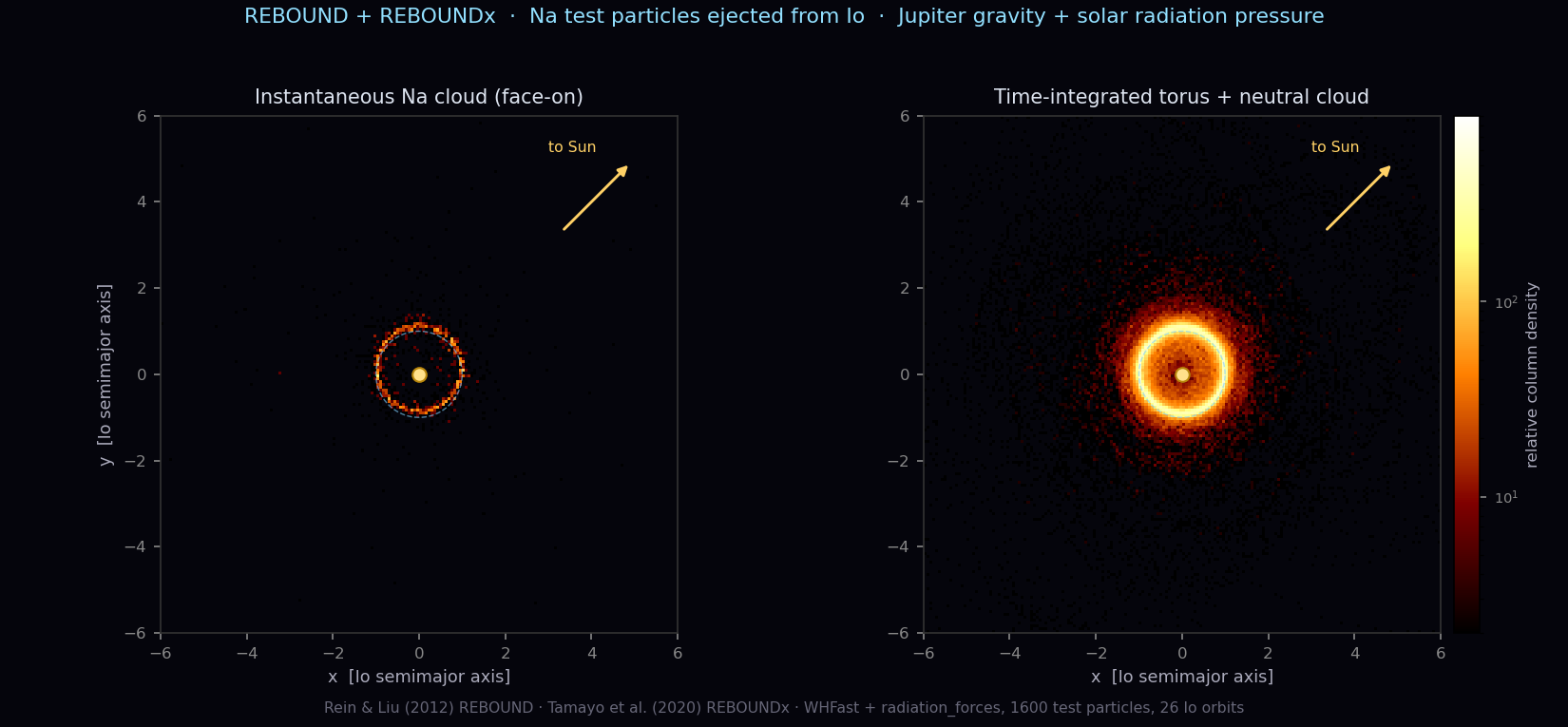
SERPENS — a 3-D Monte Carlo simulation of an evaporating exomoon transiting its star (Meyer zu Westram, Oza & Galli 2024, JGR): the sputtered particles form a torus and local cloud, visible in evaporative transmission spectroscopy (Gebek & Oza 2020, MNRAS). This is the engine behind our exosphere predictions from Io to the lava worlds.
C'est Quoi une "Exosphère" ? An exosphere is the boundless, external envelope of a gas tenuously extending from a planetary surface or atmosphere. This gas represents the interface between planets and stars as it directly transitions into the interplanetary medium (a.k.a space). What is unique about the gas is: it is, by definition collisionless rendering it unlike any gas one experiences on Earth. This gas would be more similar to a near-vacuum than oxygen itself (प्राणवायु). Understanding, the dynamics of such a physical system are hence quite complex, as the system can behave far from the familiar thermodynamic equilibrium of a gas.
Latest Works
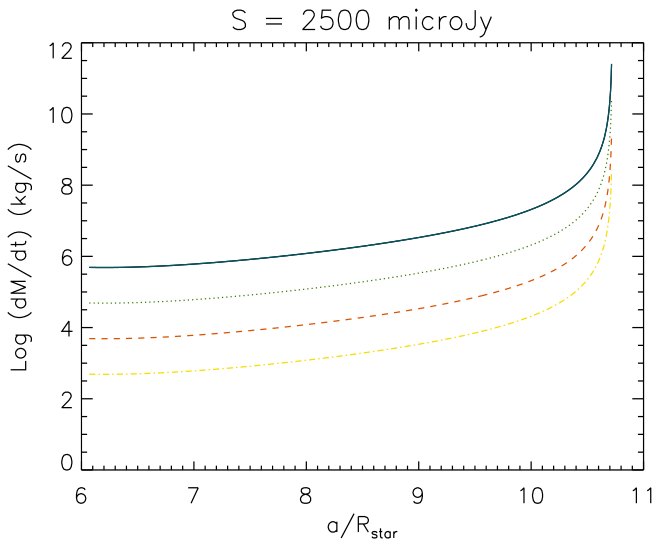
Volcanic Satellites and Ion Escape in the Magnetospheres of Ultra-Cool and Brown Dwarf Stars
Radio emission from some ultra-cool dwarf stars implies Jupiter-like radiation belts. We show that gas from a tidally heated, Io-like volcanic moon orbiting close to the star could supply that plasma, as could a weak outflow from the star's own ionosphere.
Lanza & Oza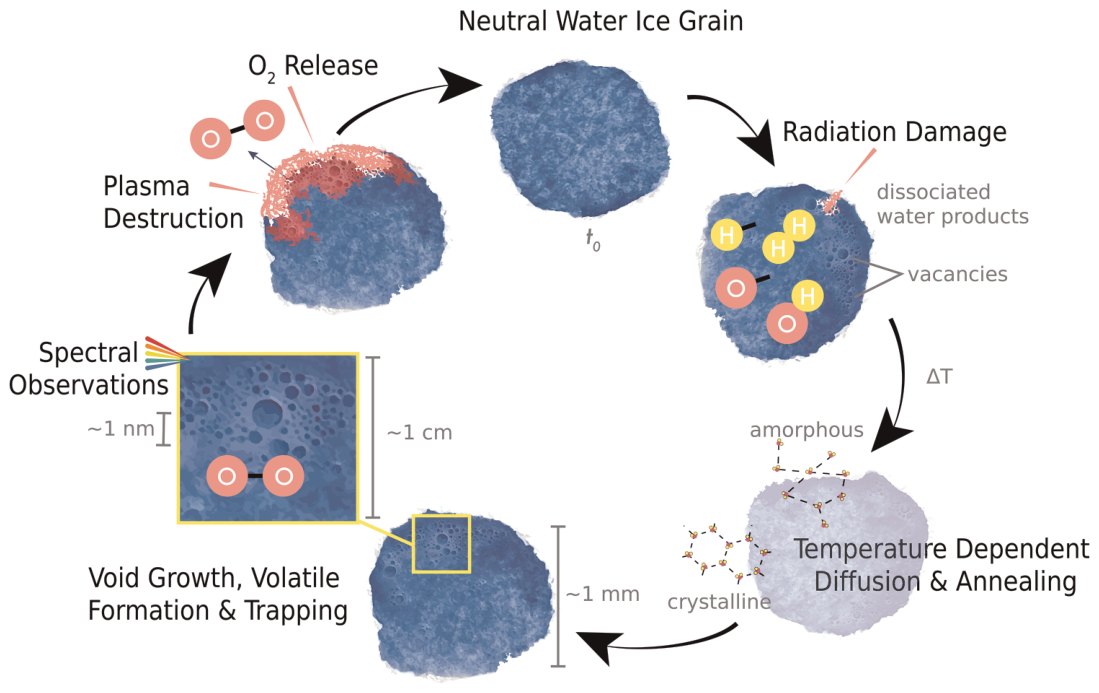
Plasma and Thermal Processing Leading to Latitudinal and Temporal Variability of the Trapped O2 at Europa and Ganymede
How Europa's and Ganymede's oxygen is made, trapped and released: plasma damages surface ice grains, creating voids where O₂ collects, and surface temperature controls when it escapes, explaining why the oxygen varies with latitude and over time.
Oza et al.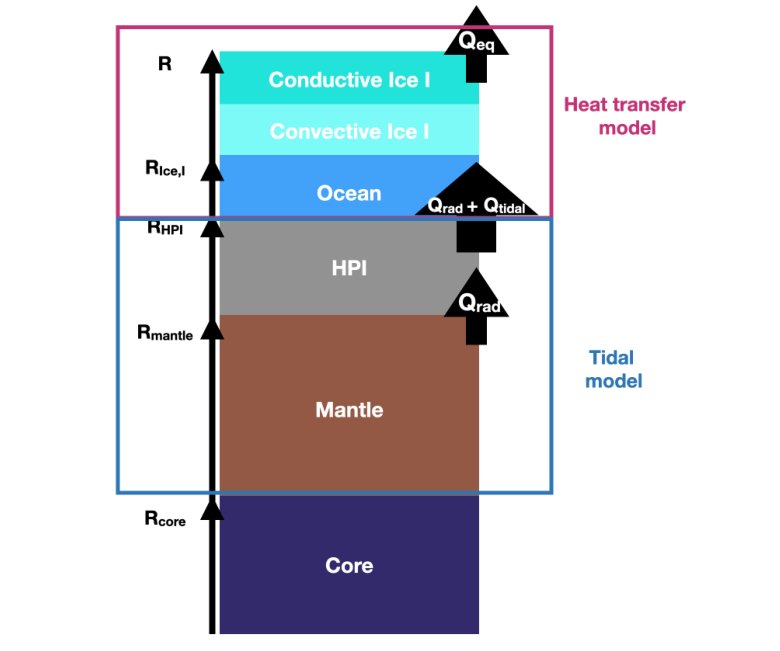
Interior–atmosphere coupling on TRAPPIST-1f, g, and h: cryovolcanic water exospheres and infrared detectability
Could TRAPPIST-1 f, g and h hide oceans beneath ice, and would their water plumes be visible? Interior models favor thin ice shells and shallow oceans on f and g, and localized plume-like outgassing gives stronger JWST transmission signals.
Kleisioti et al. incl. Oza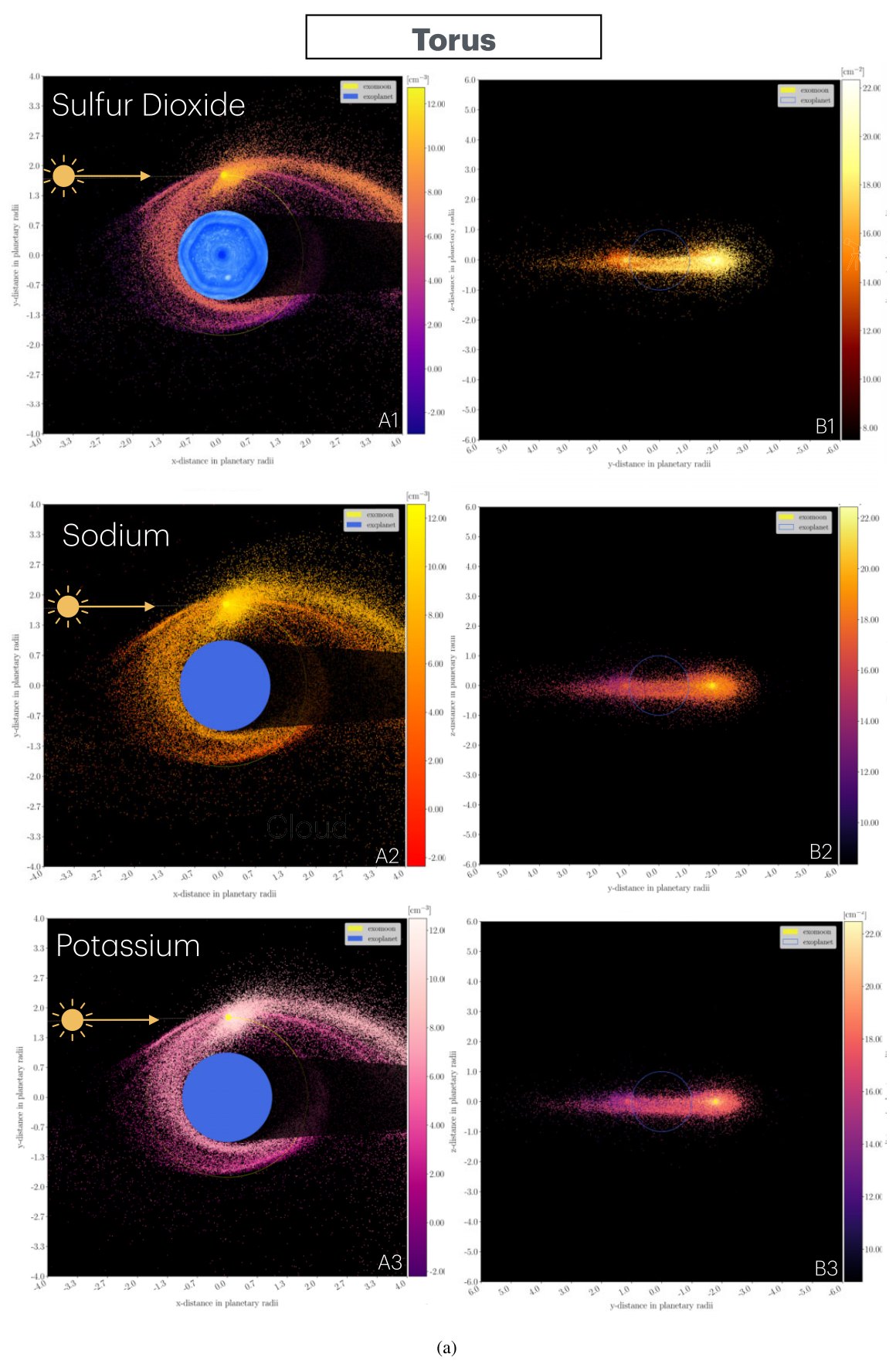
Volcanic satellites tidally venting Na, K, and SO2 in optical and infrared light
Sodium, potassium and sulfur dioxide around the hot Saturn WASP-39 b vary by more than tenfold between ground-based and JWST observations. A tidally heated volcanic moon venting gas into a cloud or torus reproduces these changes, much as Io does at Jupiter.
Oza et al.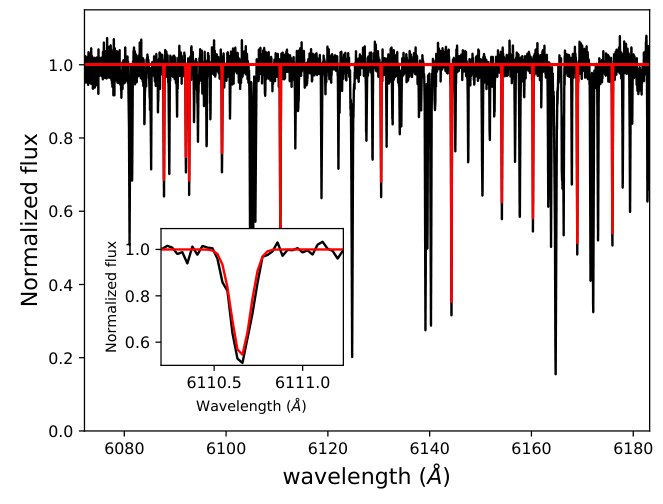
Doppler shifted transient sodium detection by KECK/HIRES
The first Keck/HIRES transit observations of WASP-49 A b detect sodium that is Doppler-shifted relative to the planet, blueshifted at ingress and redshifted at egress, suggesting the gas does not come from the planet's own atmosphere.
Unni et al. incl. Oza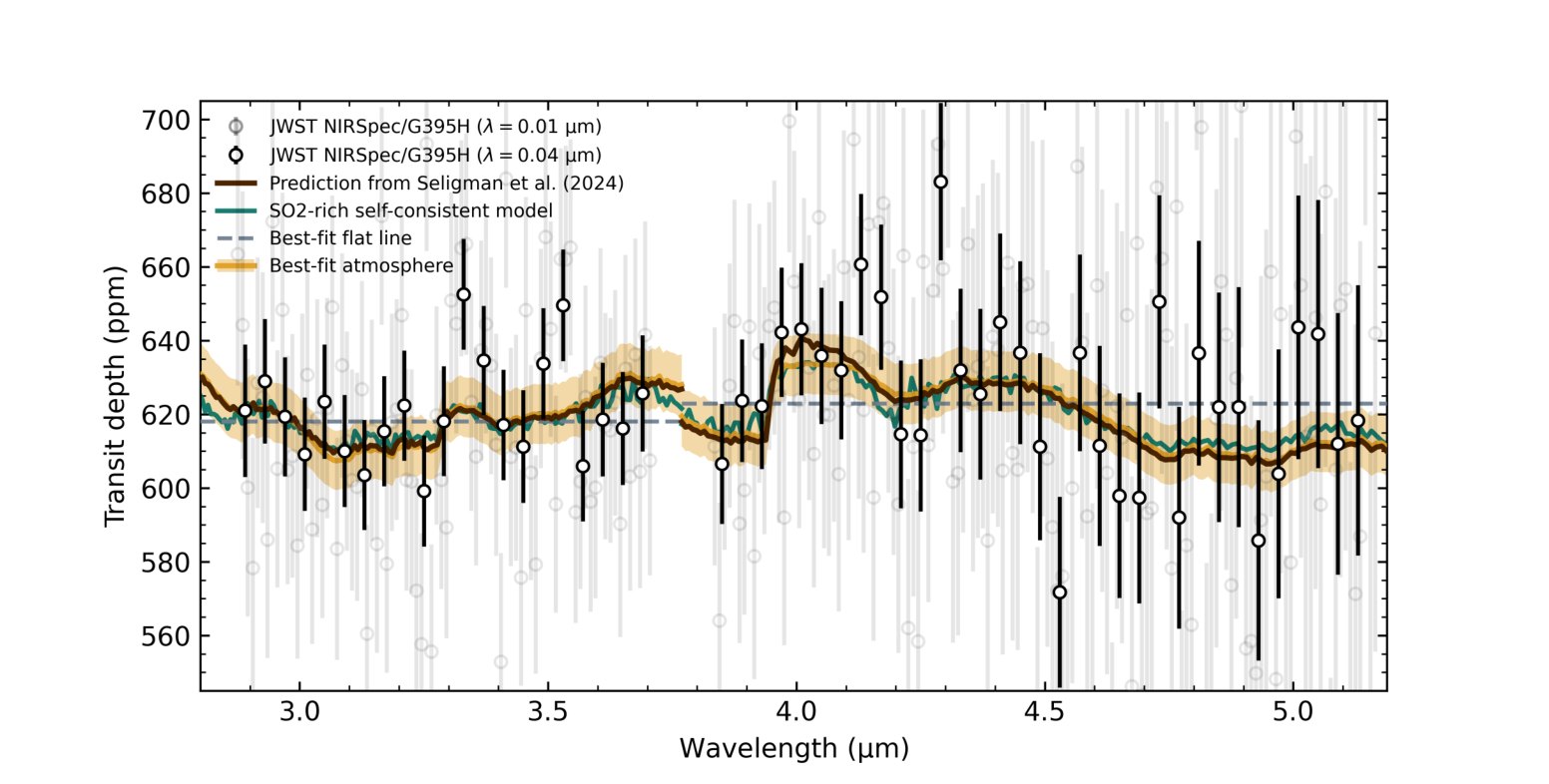
Evidence for a Volcanic Atmosphere on the Sub-Earth L 98-59 b
Four JWST transits of the sub-Earth L 98-59 b favor a thin sulfur dioxide atmosphere, likely replenished by volcanism and tidal heating at least eight times stronger per unit mass than Io's.
Bello-Arufe et al. incl. OzaDISHOOM DISHOOM
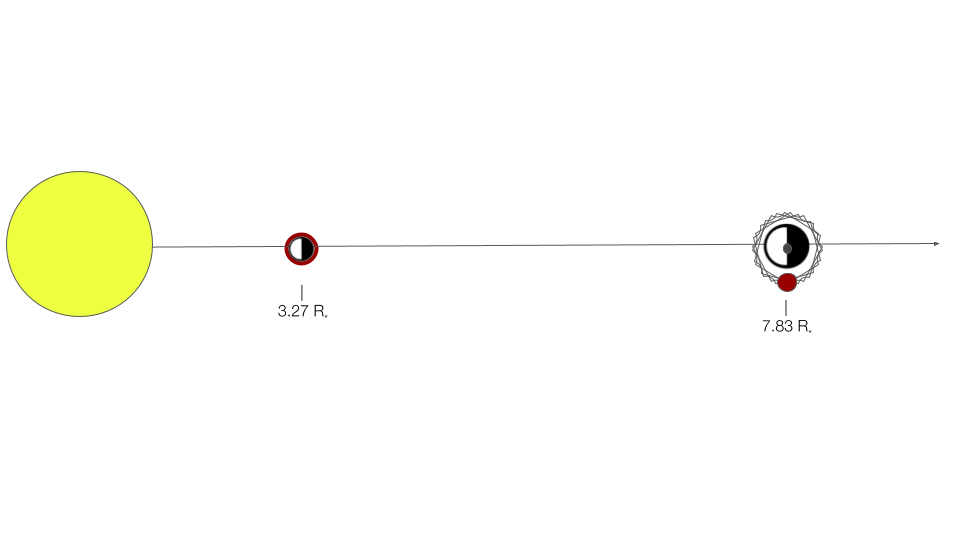
Desorbing Interiors via Satellite Heating to Observe Outgassing Model. A transparent, semi-analytic model for active [exo]planetary bodies. The model first calculates the heating rate due to tides and/or thermal and plasma irradiation. Subsequently, the mass loss rate, and eventual rate of outgassing is estimated based on the species in question. For Europa, these are water products, and for Ios (and exo-Ios) these are volcanic volatiles. Finally, based on the atmospheric evolution, the observable line-of-sight column density is estimated.


Teaching
Caltech · Bern · IIA · UNC · UVA
CaltechAstrobiology Ge/Ay 159Instructors: Prof. Yuk L. Yung, Furkan Ozturk, Dr. Stuart Bartlett · A. V. Oza (Co-Instructor), 2025–2026
Universität BernPlanet Formation and EvolutionInstructors: Dr. A. V. Oza, Prof. Yann Alibert
Indian Institute of AstrophysicsIntroduction to Planetary AstrophysicsInstructor · host Prof. Sivarani Thirupathi
UNC Chapel Hill · UVAIntroduction to Astronomy · Unsolved Mysteries of the UniverseRobotic-telescope labs (Skynet) and seminar recitations
Research Interests
Current projects in 2026, from ocean worlds and volcanic moons to exoplanet atmospheres and the next generation of observatories:
Exomoon Detection & Volcanic Exomoons
SERPENS simulation of an evaporating exomoon feeding a sodium torus around its hot giant planet — the spectral fingerprint of extrasolar volcanism.
Oza et al. 2019, ApJ ↗O₂ = O₂: Molecular Oxygen on Europa & Ganymede
3-D Exosphere General Model of the O₂ envelopes of icy moons — radiolytic oxygen as metabolic fuel, from HST spectra to Europa Clipper.
Papers on ADS ↗Volcanic SO₂: Io & the Lava Worlds (JWST)
Tidally driven outgassing from Io's magma reservoirs to disintegrating rocky exoplanets — thermal desorption simulation of 55 Cnc e shown here.
Papers on ADS ↗
Titan × Habitable Worlds Observatory
Preparing Titan's N₂/CH₄ escape, photochemistry and habitability observables for NASA's next flagship UV–optical–IR observatory.
Mission ↗
SERPENS 3-D Monte Carlo & DISHOOM Modeling
An open-source ecosystem: DISHOOM's semi-analytic outgassing (schematic shown) and SERPENS's collisionless particle transport, from Io to exo-Ios.
Code on GitHub ↗
High-Resolution Spectroscopy (Europa Clipper era)
Evaporative transmission spectroscopy — reading alkali lines at nanometer resolution to weigh escaping atmospheres, in orbit and from the ground.
Gebek & Oza 2020, MNRAS ↗Scholarly Profile
0h-index (Google Scholar)
0missions — Europa Clipper, JWST, HST
0countries of collaborators
0continents of graduate teaching
News & Media
Press coverage and features — from Europa's oxygen to volcanic exomoons. Full list in my CV.

Featured · Book · 2026
Lost in Curiosity: Field Notes from Scientists' Adventures into the Unknown
By science journalist Roberta Kwok (Sourcebooks, July 2026; announced as Minutiae). The chapter ASTRONOMY: Moon on Fire follows our hunt for a volcanic exomoon.
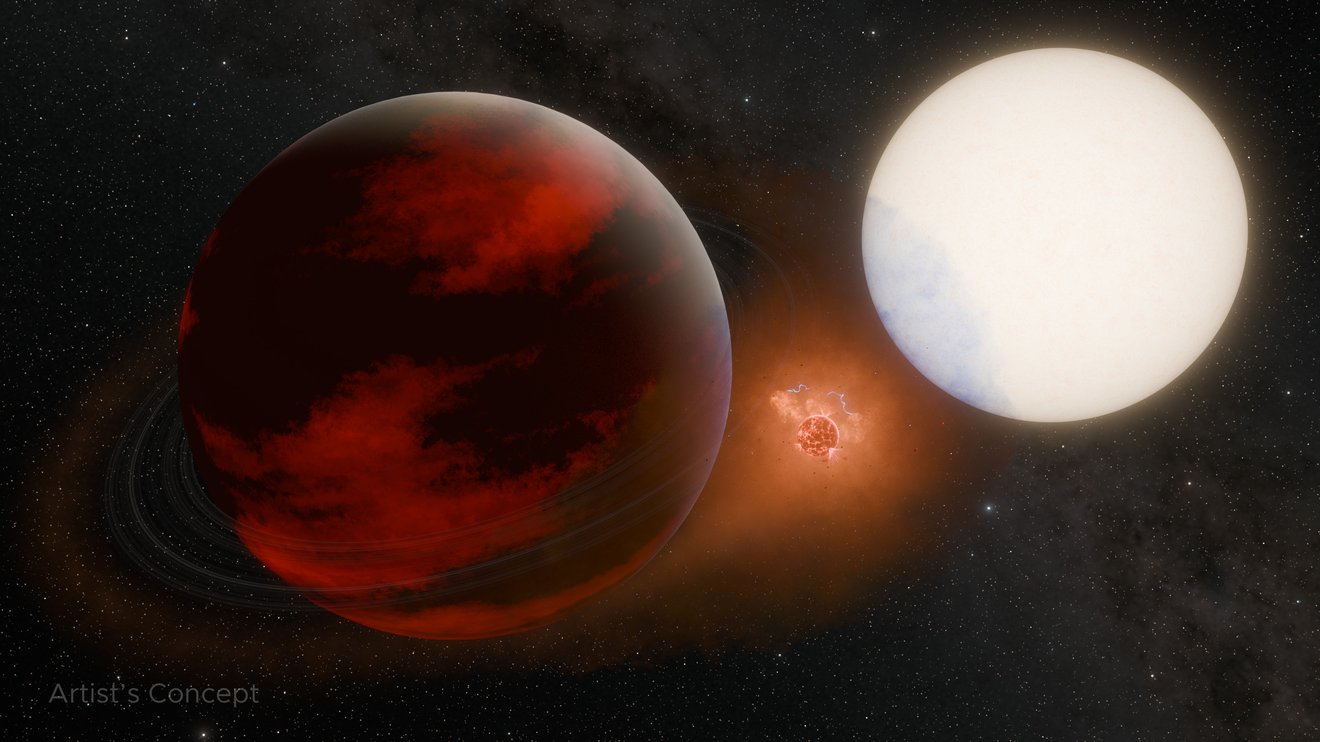
 Feb 2026
Do alien exoplanets have exomoons and exorings?
The Universe (Universe Fridays) — how far are we from finding them
Oct 2025Has JWST Finally Found an Exomoon?
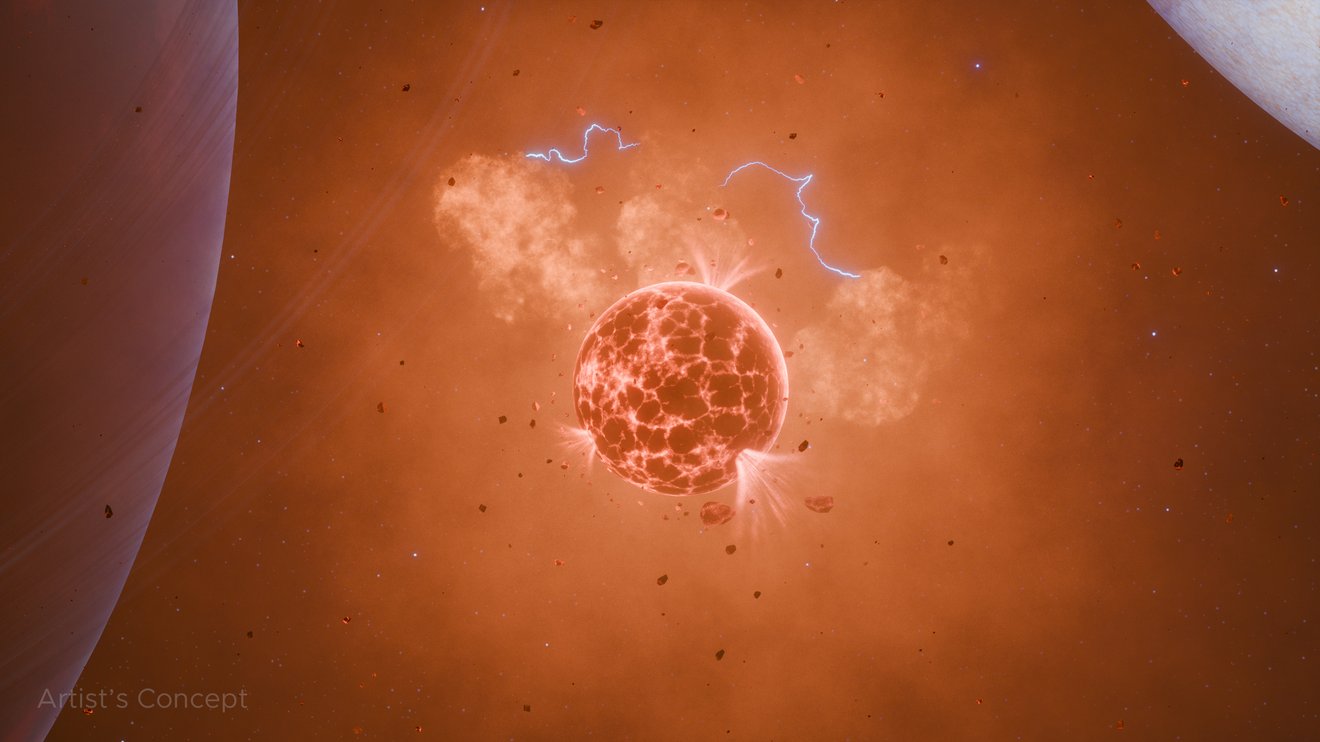
 Oct 2024
A Distant Planet May Host a Moon That’s Spewing a Volcanic Cloud

 Oct 2024
Does Distant Planet Host Volcanic Moon Like Jupiter’s Io?
NASA / JPL press release
2024California Institute of Technology
 2024
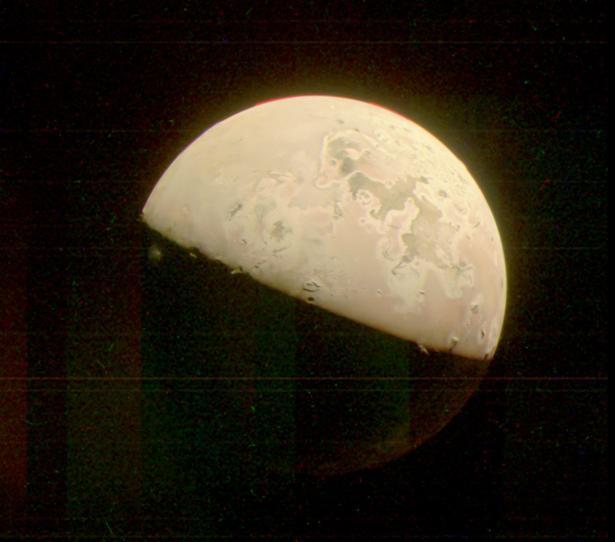
2024Jupiter’s moon Io is a volcanic hellscape—and has been since the solar system began
 2022
2022Where are the moons that orbit exoplanets?
 Mar 2021
The Race to Find Alien Moons
Mt. EtnaThe Universe
PBS / NOVA · BBC Studios2020
The Universe — Mt. Etna segment
Filming canceled due to the COVID-19 pandemic
 2019
2019We may have seen signs of an exomoon spewing out volcanic gas
 Sep 2019
Scientists may have found a fiery exomoon that’s like a volcanic planet from ‘Star Wars’
Centauri DreamsMay 2019
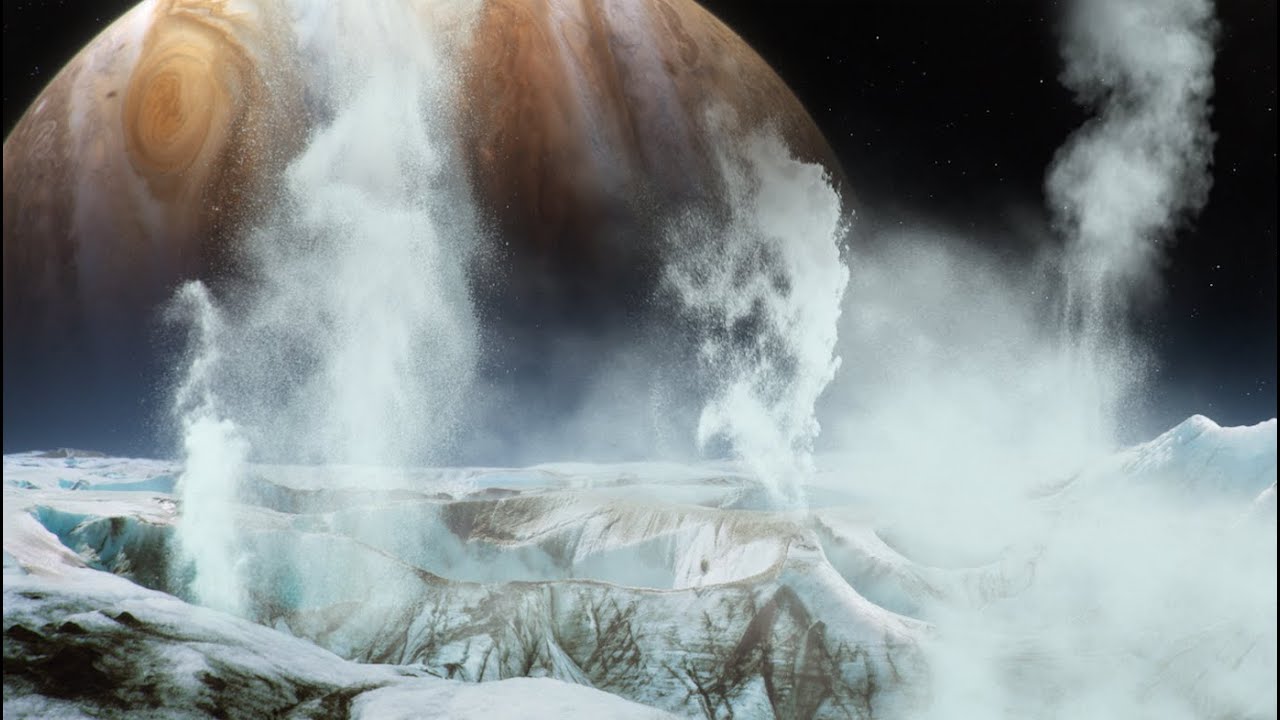
Europa’s Oxygen and Aerobic Life

 2017
2017Dance Your Ph.D. — Finalist, Physics (Top 3)
O₂ “Panga” on Europa — Bhangra rendition of the thesis, filmed in Paris · watch on YouTube ↗
Get in touch
For research collaborations, speaking, teaching, or student inquiries — email is best.
© Apurva V. Oza, All rights reserved. Design: HTML5 UP.